Introduction
Food manufacturers today face increasing pressure to maintain hygiene, comply with stringent food-safety regulations, and reduce contamination risks across their production and storage processes. One of the most critical yet often underestimated areas is bulk material storage. Ingredients such as sugar, maida (flour), starch, and other powders are highly sensitive to moisture, dust, pests, and cross-contamination.
This is where food-grade silo storage systems play a vital role. Unlike conventional storage or non-sanitary silos, food-grade silos are engineered specifically to meet hygiene, safety, and compliance requirements of modern food industries. In this guide, we explore how hygienic silo design works, what compliance standards demand, and why food manufacturers are rapidly shifting toward food-grade bulk silo storage solutions.
What Is a Food-Grade Silo Storage System?
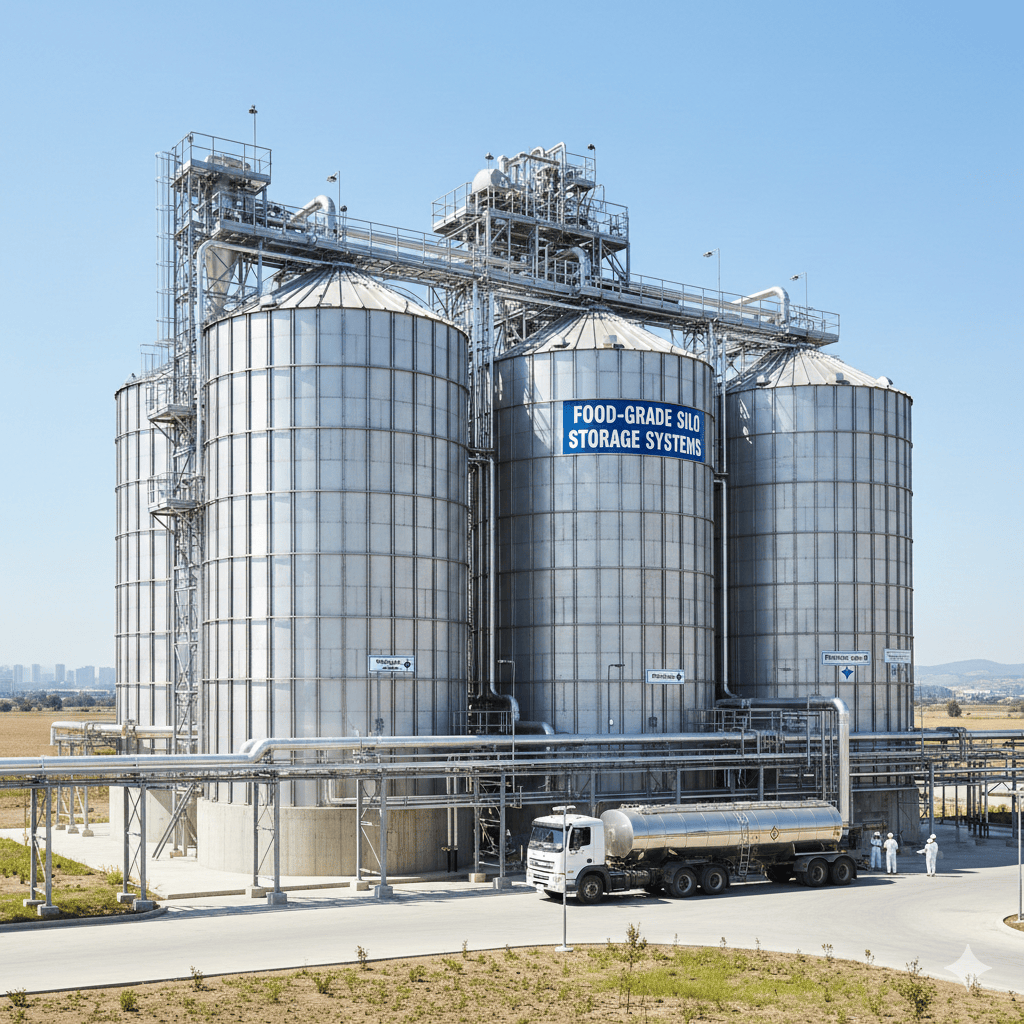
A food-grade storage silo system is a bulk storage solution specifically designed to safely store food ingredients while preventing contamination, moisture ingress, material degradation, and hygiene failures.
Food-grade silo storage systems are an advanced form of bulk material handling silo systems, specifically engineered to meet hygiene and food-safety compliance requirements.
Unlike general industrial silos, food-grade silos focus on:
- Sanitary material selection
- Smooth, cleanable internal surfaces
- Controlled storage environment
- Compliance with food-safety standards
These systems are widely used for:
- Sugar storage silos
- Maida / flour storage silos
- Starch, salt, and other food powders
Why Hygiene Is Critical in Bulk Food Storage
Contamination Risks in Traditional Storage
Bag-based or poorly designed bulk storage exposes food materials to:
- Airborne contamination
- Human handling errors
- Moisture absorption
- Pest infestation
- Dust accumulation
For ingredients like sugar and flour, even minor contamination can lead to product rejection, audit failure, or production downtime.
Hygienic Silo Storage Advantage
Food-grade silo storage systems create a closed, controlled environment, significantly reducing external exposure and handling risks while improving traceability and consistency.
Key Design Features of Hygienic Food-Grade Silos
1. Food-Grade Materials of Construction
- Stainless steel (SS 304 / SS 316) is commonly used for product-contact areas
- Smooth surface finish prevents material adhesion and microbial growth
- Corrosion-resistant construction ensures long service life
This is especially important in sugar storage silos and maida storage silos, where fine particles tend to cling to rough surfaces.
2. Smooth Internal Geometry & Flow Design
Hygienic silos are engineered to avoid:
- Dead zones
- Sharp corners
- Material hang-ups
Optimized hopper angles and mass-flow designs ensure complete discharge, reducing residue buildup and cross-contamination between batches.
3. Moisture & Condensation Control
Moisture is one of the biggest enemies of food powders.
Food-grade silo systems integrate:
- Controlled ventilation
- Dehumidified air systems
- Temperature monitoring
This prevents caking, lump formation, and microbial growth, particularly critical for flour and sugar storage.
4. Dust Control & Safety
Sugar and flour dust are combustible and pose serious explosion risks.
Hygienic silo systems incorporate:
- Dust-tight filling and discharge points
- Controlled pneumatic conveying
- Explosion-safe and dust-controlled designs
This enhances both plant safety and regulatory compliance.
Compliance Standards for Food-Grade Silo Storage
Food-grade silo systems are designed to align with major food-safety and quality standards, including:
- FSSAI guidelines (India)
- ISO 22000 / HACCP principles
- GMP (Good Manufacturing Practices)
- BRC / Global Food Safety standards
Compliance-focused silo design helps manufacturers:
- Pass audits with confidence
- Reduce non-conformities
- Improve brand and customer trust
Food-Grade Silos vs Conventional Industrial Silos
| Aspect | Food-Grade Silo | Conventional Silo |
|---|---|---|
| Hygiene | High | Limited |
| Material | Food-grade SS | Mild steel / mixed |
| Cleanability | Easy & thorough | Difficult |
| Compliance | Food-safety ready | Often non-compliant |
| Risk of contamination | Very low | High |
For food processors, food-grade silo storage is no longer optional — it is a compliance requirement.
Applications Across Food Industries
Food-grade silo storage systems are widely adopted in:
- Sugar manufacturing & refineries
- Flour mills & maida processing plants
- Biscuit, bakery & confectionery units
- Starch & food ingredient manufacturers
They also serve as the foundation system that links seamlessly with:
- Sugar storage silos
- Maida storage silos
- Automated bulk material handling systems
Business & Operational Benefits
Implementing hygienic food-grade silo storage systems delivers measurable benefits:
- Reduced material loss & spoilage
- Improved audit readiness
- Lower manpower dependency
- Better inventory control
- Enhanced plant cleanliness
- Long-term cost savings
Most facilities see strong ROI once they move from bag-based or semi-manual storage to fully engineered silo solutions.
Best Practices When Planning a Food-Grade Silo System
- Conduct material flow and hygiene assessment
- Select correct material of construction
- Design for easy inspection and maintenance
- Integrate moisture and dust control systems
- Ensure compliance documentation is available
- Train operators on hygienic handling procedures
A properly designed silo is not just equipment it is part of your food-safety ecosystem.
Conclusion
As food-safety regulations tighten and manufacturing efficiency becomes non-negotiable, food-grade silo storage systems are emerging as the gold standard for hygienic bulk storage. Whether storing sugar, maida, or other food powders, these systems help manufacturers protect product quality, meet compliance requirements, and streamline operations.
For plants planning capacity expansion, automation, or audit-driven upgrades, investing in hygienic silo storage is a strategic, future-ready decision.
Planning a hygienic silo storage solution for your food plant?
Our engineering team designs custom food-grade silo storage systems tailored to your material, capacity, and compliance requirements.
Contact Knitcon Solutions to discuss your sugar, flour, or food ingredient storage needs.