Introduction
Every biscuit manufacturing plant faces the same first decision before a single dough batch is mixed: how does flour actually enter the plant? Get this wrong and you inherit dust, labour cost, and material loss for the life of the facility.
Choosing the right bag dump station for biscuit plant operations — or moving to a bulk tanker unloading system instead is one of the highest-impact decisions in your raw material handling design, yet it is often made on gut feel rather than actual throughput and cost data.
This guide breaks down both intake methods so you can decide which one fits your plant's capacity, budget, and labour availability, and how they connect into a complete raw material handling system.
What Is a Bag Dump Station?
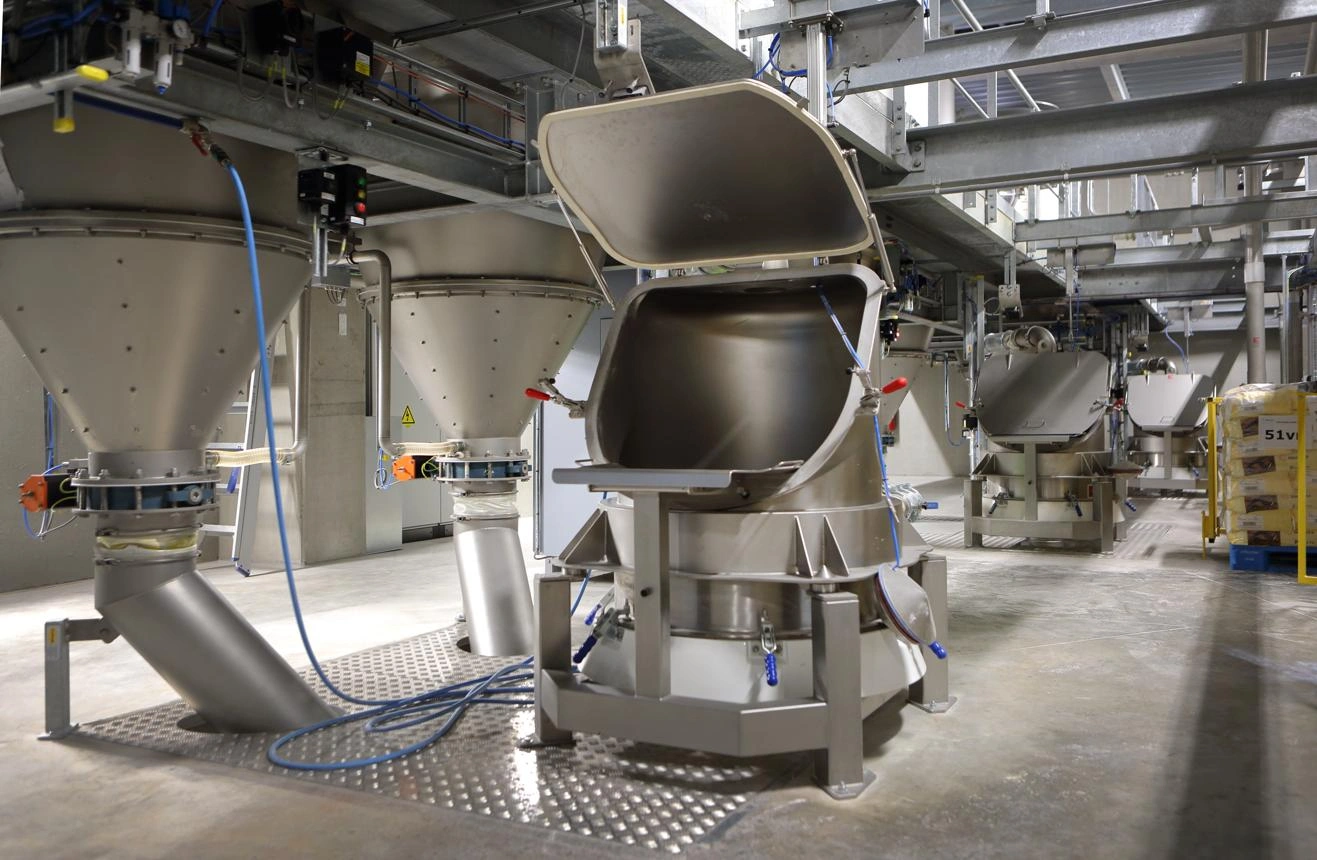
A bag dump station is a manually operated intake point where 25 kg or 50 kg bags of flour, maida, or sugar are emptied into the system by an operator. A well-engineered flour bag dumping station is not just an open hopper — it includes:
- A hydraulic tilting mechanism so operators aren't lifting or straining
- An in-built dust collector to capture airborne flour at the point of discharge
- A magnetic separator to remove tramp metal before it reaches the mixer
- A rotary airlock valve for controlled, sealed discharge into the conveying line
This setup is common in plants running 1–5 TPH, or in facilities that receive flour from multiple regional suppliers where bagged delivery is the norm.
What Is Bulk Tanker Unloading?
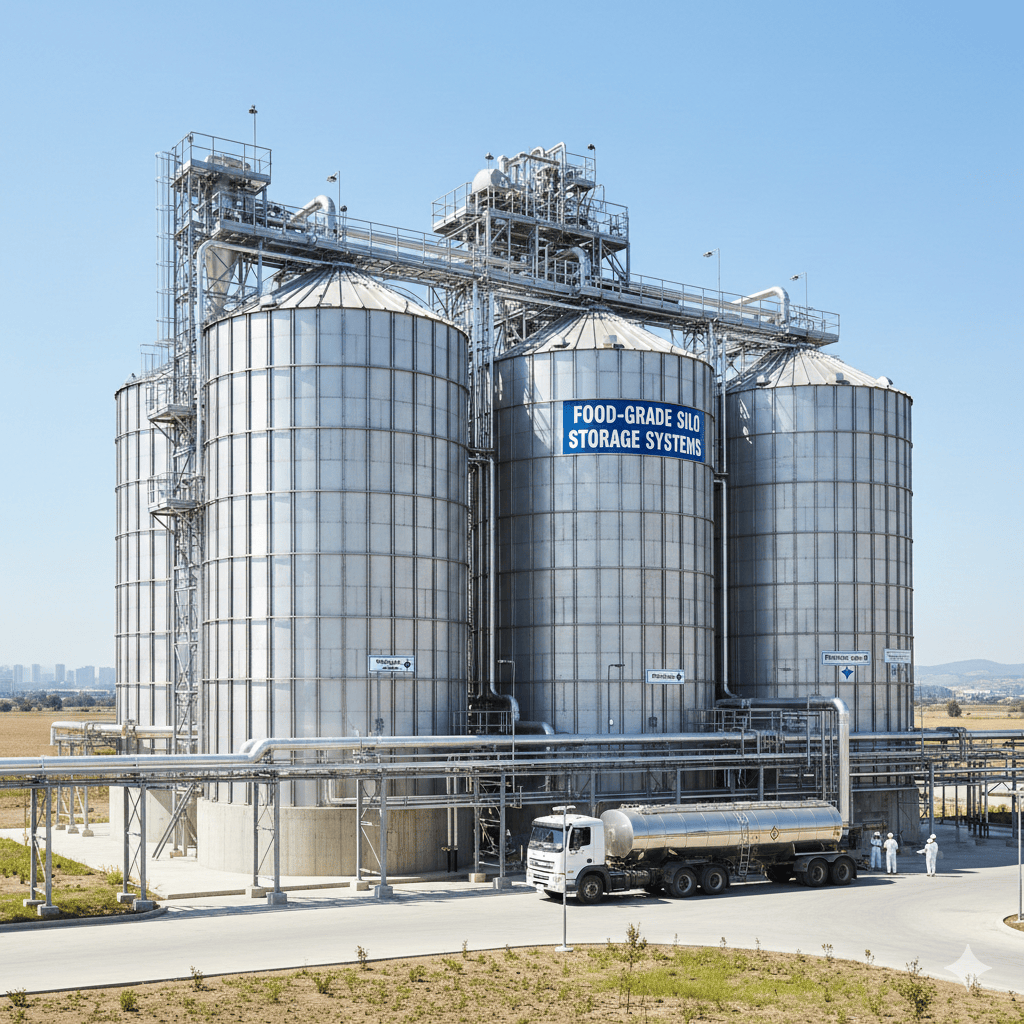
A bulk tanker unloading system receives flour directly from a road tanker into storage silos through a sealed pneumatic line — no bags, no manual tipping, no exposed product at any point. Air is used to push or pull the flour from the tanker into the silo, typically through a positive-pressure blower package with filtration at the receiving end.
For large-scale operations, bulk tanker unloading offers superior cost efficiency by reducing labour dependency and handling losses — it is the standard choice once a plant crosses roughly 8–10 TPH of flour consumption, where bag handling simply cannot keep pace without adding shifts of manpower.
Bag Dump Station vs Bulk Tanker Unloading: Key Differences
| Parameter | Bag Dump Station | Bulk Tanker Unloading |
|---|---|---|
| Best suited capacity | 1–5 TPH | 8–20+ TPH |
| Labour requirement | 2–3 operators/shift | 1 operator (supervisory) |
| Dust exposure risk | Low (with dust collector) | Near zero (fully sealed) |
| Capital investment | Lower upfront cost | Higher upfront, faster payback at scale |
| Material loss | 0.5–1% typical | < 0.3% typical |
| Supplier flexibility | Any bagged supplier | Requires tanker-compatible supply chain |
| Storage requirement | Works with smaller hoppers | Requires dedicated storage silo |
Hidden Costs Most Biscuit Manufacturers Overlook
When plants compare these two intake methods, they usually compare only the equipment quotation. The real cost difference shows up later, in three places:
- Bag handling and disposal labour — emptying, folding, and disposing of hundreds of bags daily adds up to a full-time role in mid-sized plants
- Dust-related maintenance — uncontrolled flour dust settles on electrical panels, gearboxes, and overhead structures, increasing cleaning and downtime cost
- Batch inconsistency from manual handling — bag-to-bag variation and operator error affect dough consistency in ways that are hard to trace back to the source
According to workplace safety guidance from the UK's Health and Safety Executive, flour dust exposure during bag tipping and dispensing is one of the highest-risk tasks in bakery operations, which is exactly why engineered dust control at the intake stage — bag dump or tanker — pays for itself over time.
There's also a supplier-relationship cost worth factoring in: bag dump stations keep you flexible to switch suppliers or blend sources quickly, while tanker unloading commits you to a supply chain that can deliver in bulk. Neither is universally better — the right answer depends on how much you value flexibility versus scale efficiency at your specific volume.
Which System Should You Choose?
Choose a Bag Dump Station If:
- Your plant runs below 5–6 TPH of flour
- You source flour from multiple local suppliers in bagged form
- You want a lower upfront investment with room to scale later
- Floor space for a dedicated storage silo is limited
Choose Bulk Tanker Unloading If:
- Your plant runs 8 TPH or higher, or you're planning for that scale
- You have a consistent bulk flour supplier who can deliver by tanker
- Labour cost and dust-related downtime are recurring pain points
- You're setting up a new export-oriented or high-capacity facility
How Both Fit Into a Complete Raw Material Handling System
Neither intake method works in isolation. Once flour enters the plant — whether through a bag dump station or tanker unloading — it still needs to move through pneumatic conveying to a food-grade storage silo, then through a vibro shifter and load-cell weigh hopper before it reaches the dough mixer. Many plants also run both systems in parallel: tanker unloading for the primary flour supply, and a bag dump station as a backup or for minor ingredients.
Our full breakdown of this end-to-end process is covered in our guide to the complete raw material handling system for biscuit manufacturing plants, which covers flour, sugar, and liquid integration end to end.
Not Sure Which Intake System Fits Your Plant?
Every biscuit plant's flour volume, supplier network, and floor layout is different. Our engineering team can review your current or planned capacity and recommend the right intake configuration — bag dump station, bulk tanker unloading, or a hybrid of both.