Introduction
Most biscuit manufacturers only investigate their flour handling setup after a quality complaint or a bad month of yield numbers.
But an underperforming flour handling system for biscuit plant operations rarely fails suddenly — it leaks money quietly, month after month, through material loss, downtime, and inconsistent batches that are easy to miss until you add them up.
Here are five warning signs that your current system is costing you more than it should — and what an engineered system fixes.
SIGN 1 — HIGH MATERIAL LOSS DURING TRANSFER
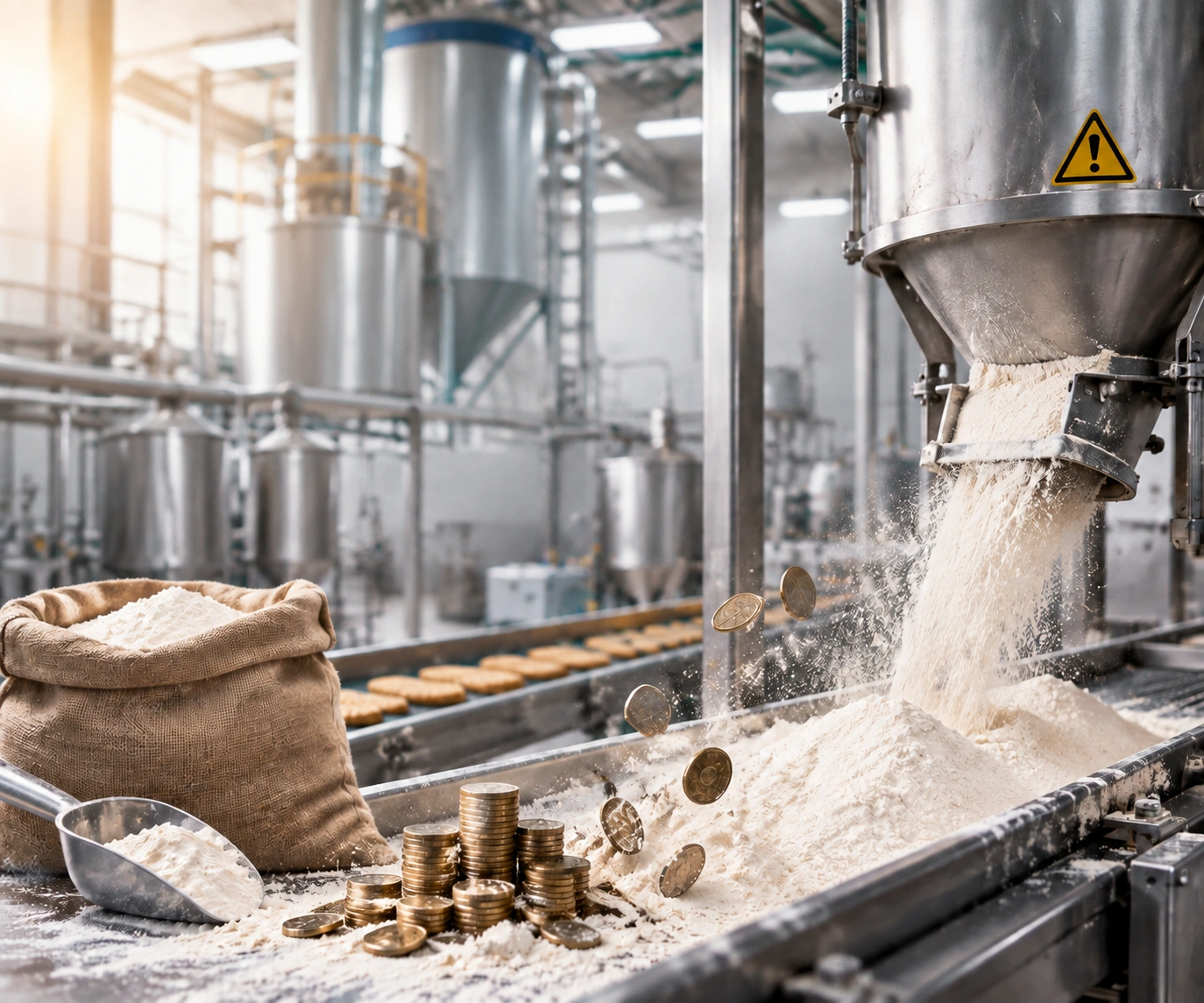
Conventional, manually handled flour systems typically lose 3–5% of material during transfer — spillage during bag tipping, residue left in hoppers, and dust that never makes it to the mixer. On a plant consuming several tonnes of flour daily, that's a direct, recurring cost that never shows up as a single line item, which is exactly why it goes unnoticed for years.
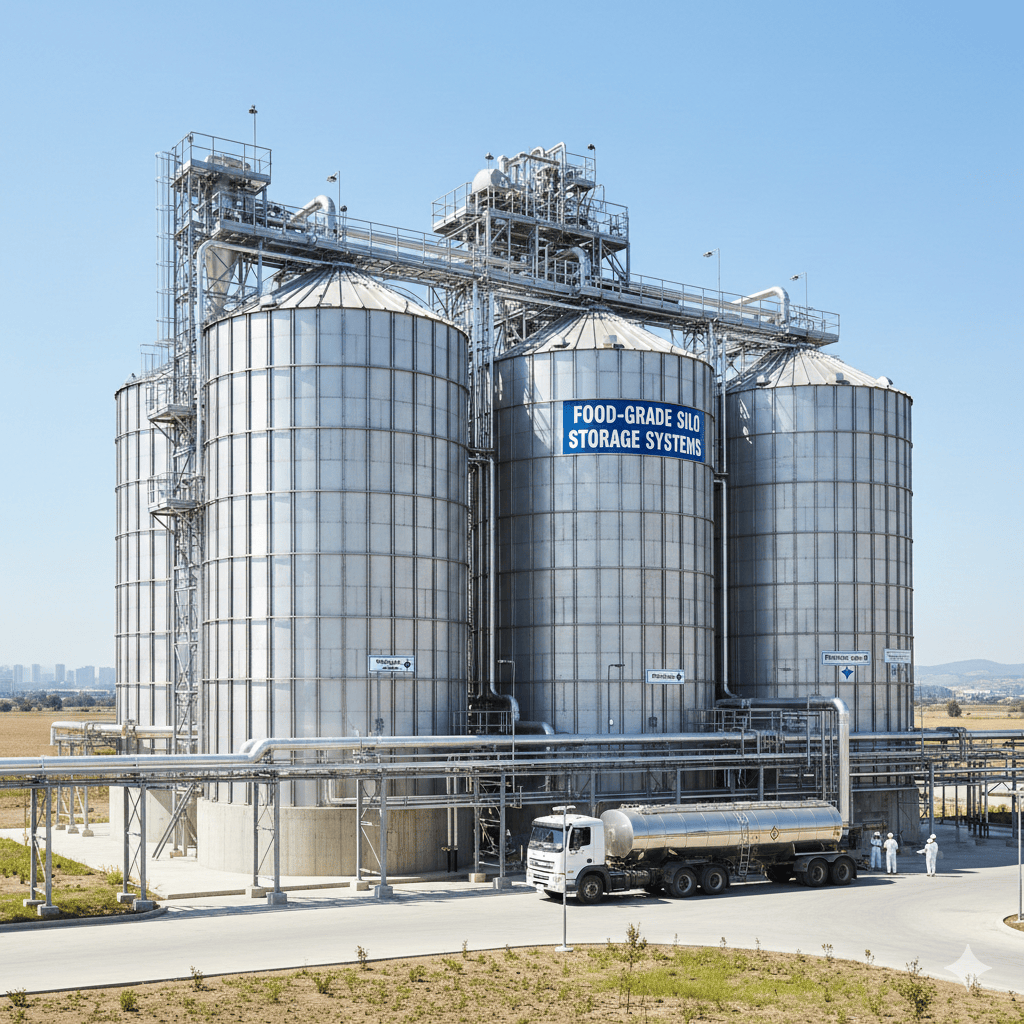
An engineered, enclosed system — from bag dump station or tanker unloading through pneumatic conveying to the weigh hopper — typically holds material loss under 1%.
SIGN 2 — FREQUENT DUST-RELATED DOWNTIME AND CLEANING
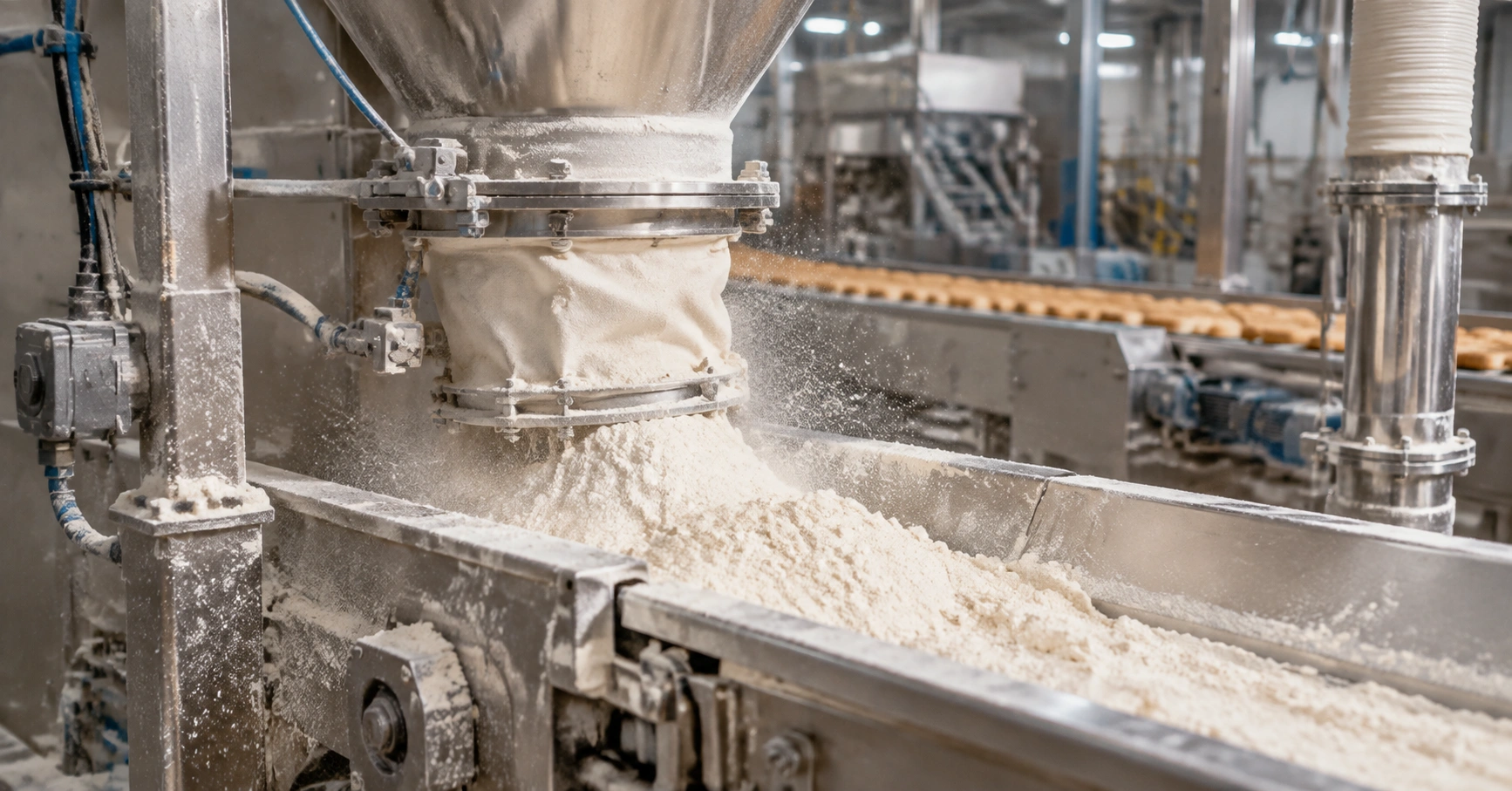
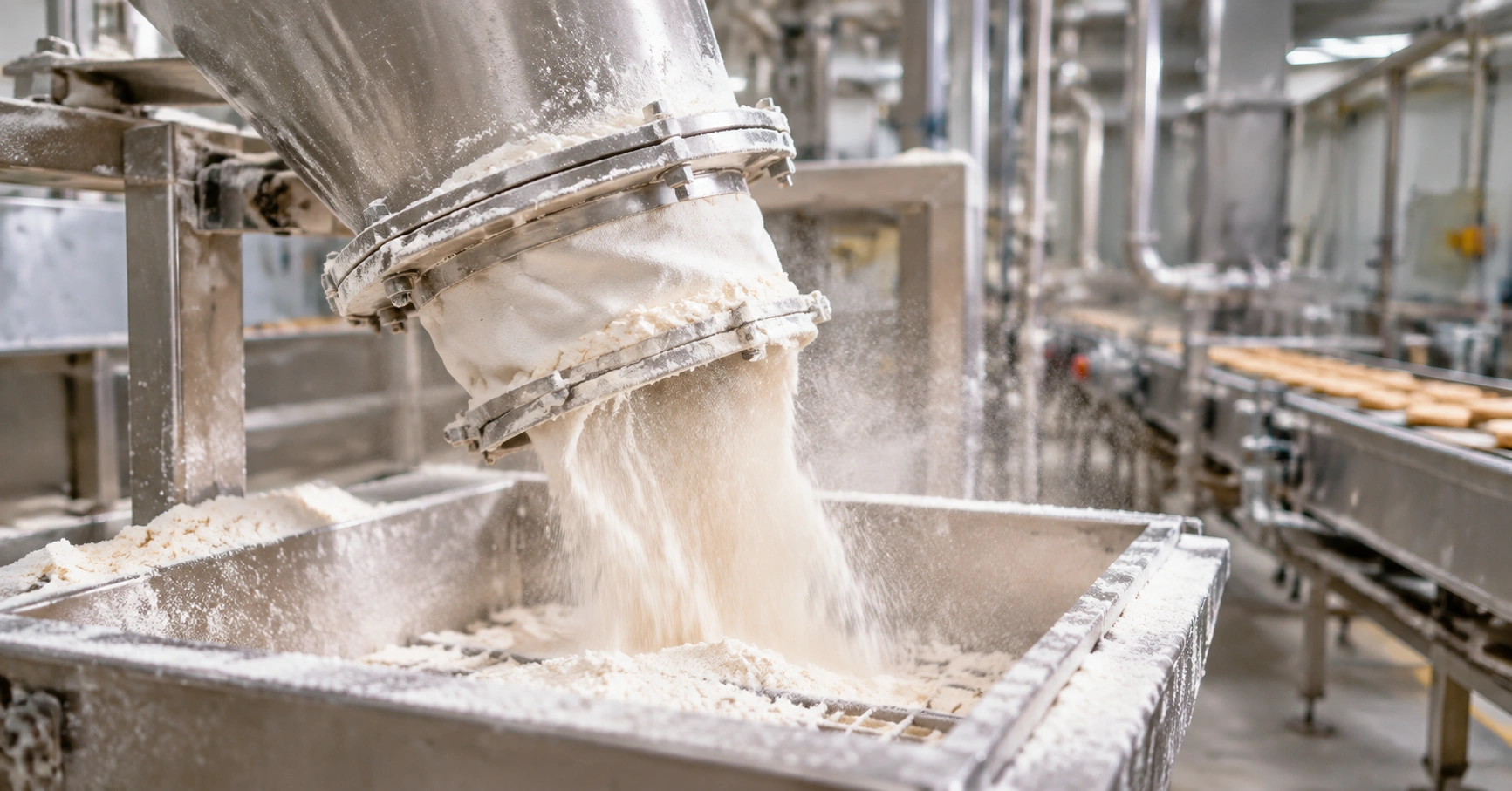
If your maintenance team spends significant time each week clearing flour dust from panels, gearboxes, and overhead structures, that's not routine housekeeping — it's a symptom of an open, unenclosed handling system. Beyond the labour cost, accumulated flour dust is a recognised combustible dust hazard, which means uncontrolled dust isn't just inefficient, it's a safety liability.
- Unplanned stoppages to clear blocked chutes or clogged filters.
- Manual cleaning cycles that pull staff away from production.
- Equipment wear accelerated by fine dust ingress into bearings and drives.
SIGN 3 — INCONSISTENT BATCH QUALITY
Manual dosing and inconsistent flour moisture from open-air handling both show up downstream as dough that behaves differently batch to batch — variable hydration, inconsistent gluten development, and biscuits that don't bake evenly. When operators start "adjusting by feel" to compensate, that's a strong sign the handling and batching system, not the recipe, is the actual problem.
PLC-controlled, load-cell-based weigh hoppers remove this variability by dosing flour to the recipe every single time, regardless of which operator is on shift.
SIGN 4 — HIGH MANPOWER DEPENDENCY
If your flour handling still requires two or three operators per shift just to tip bags, monitor hoppers, and manually transfer material between stages, that labour cost compounds year over year — and it scales linearly with production, unlike an automated system where throughput can increase without adding headcount
- Labour required for bag handling, tipping, and disposal.
- Additional staff to monitor and troubleshoot inconsistent manual transfer.
- Overtime and shift premiums during peak production periods.
SIGN 5 — NO TRACEABILITY OR BATCH DATA
If a quality issue traces back to "which batch of flour, from which supplier, handled by which shift" and your plant can't answer that quickly, you're operating without traceability — a growing liability as retail and export buyers increasingly demand documented, auditable production records. Manual systems typically have no logging at all; PLC and SCADA-based systems capture batch data automatically as part of normal operation.
WHAT AN ENGINEERED FLOUR HANDLING SYSTEM FIXES
| Warning Sign | Root Cause | Engineered Fix |
|---|---|---|
| High material loss | Open transfer, manual tipping | Enclosed pneumatic conveying |
| Dust-related downtime | Unfiltered, open handling points | Bin vent filters, dust collectors |
| Inconsistent batches | Manual dosing by feel | Load-cell weigh hopper + PLC batching |
| High manpower cost | Manual bag handling | Bulk tanker unloading / automated conveying |
| No traceability | No data logging | < SCADA monitoring & batch records |
These fixes are covered in detail in our guide to the raw material handling system for biscuit manufacturing plants, including the full flour, sugar, and liquid integration process from receipt to dough mixer feeding.
PUTTING A NUMBER ON THE PROBLEM
It helps to run a rough calculation for your own plant. Take your daily flour consumption, apply a conservative 3% loss figure typical of manual handling, and multiply by your flour cost per kilogram. Most manufacturers are surprised the number is a meaningful monthly figure once they actually do this math — it's usually the first moment the business case for upgrading becomes concrete rather than theoretical.
The same exercise works for labour: count the operator-hours currently spent on bag handling, tipping, and manual monitoring per shift, and multiply by your fully loaded labour cost. Compared side by side, material loss and labour cost together often justify an upgrade well before dust-related downtime or quality inconsistency are even factored in.
Frequently Asked Questions
How Much Is Your Current System Actually Costing You?
Most manufacturers underestimate their material loss and labour cost until someone runs the numbers. Share your current capacity and setup, and our engineering team will help you identify where your flour handling system is losing money — and what fixing it would look like.