Introduction
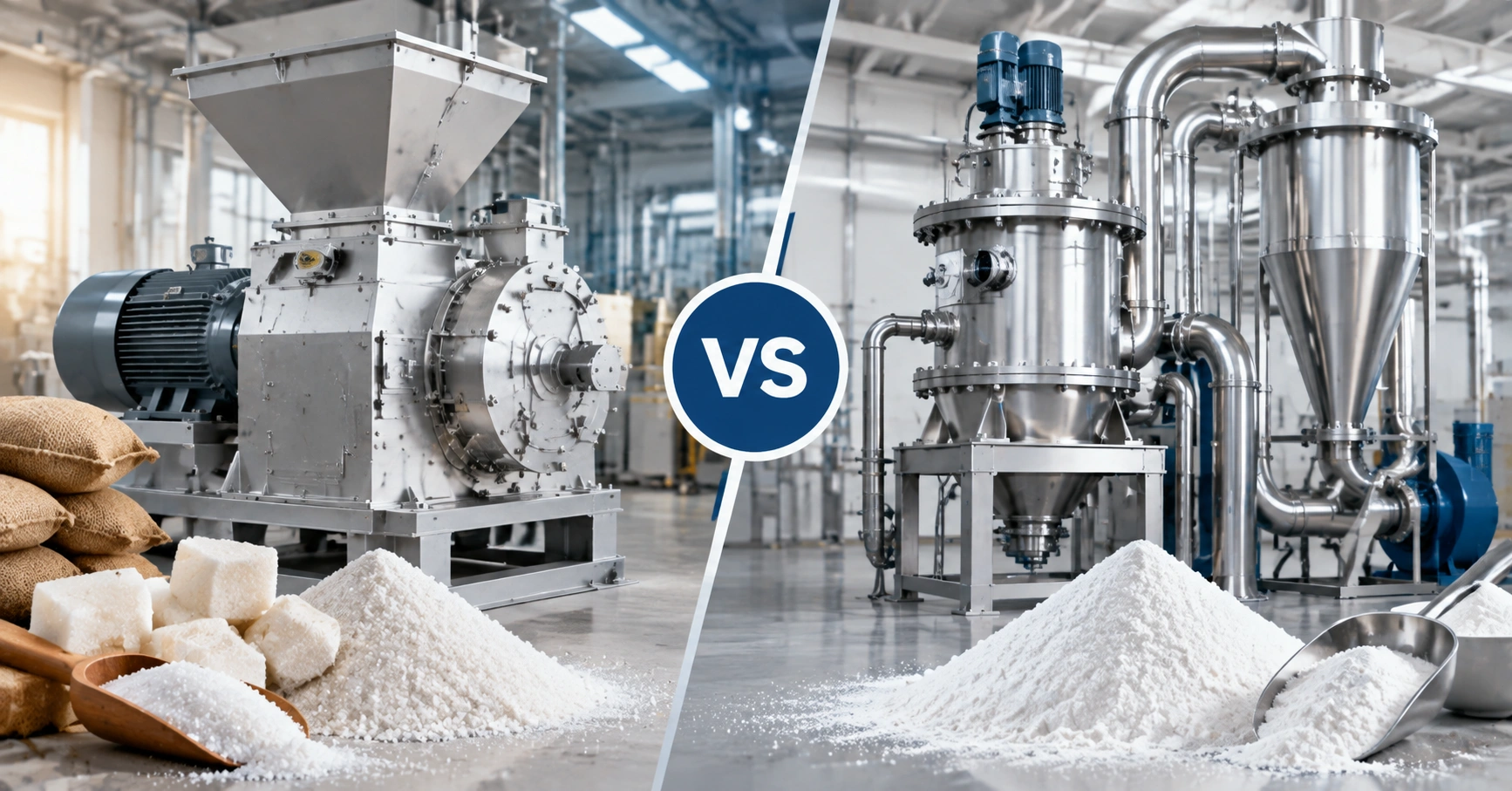
Sugar fineness is one of the most underrated variables in biscuit production — get it wrong and you either waste energy over-grinding, or end up with a gritty creamer that no amount of mixing time can fix. The universal mill vs air classifier mill decision is where that fineness gets determined, and it depends entirely on what kind of biscuit line you're running.
This guide compares both grinding systems directly so you can match the right mill to your product mix.
WHY SUGAR FINENESS MATTERS IN BISCUIT PRODUCTION
Sugar fineness affects texture, mouthfeel, and — in cream and sandwich lines — how smooth the final filling is. Coarse sugar works fine for standard dough-based biscuits, but cream fillings need near-powder consistency to avoid a gritty texture. Grinding to the wrong fineness for your product either under-delivers on quality or wastes energy grinding finer than necessary.
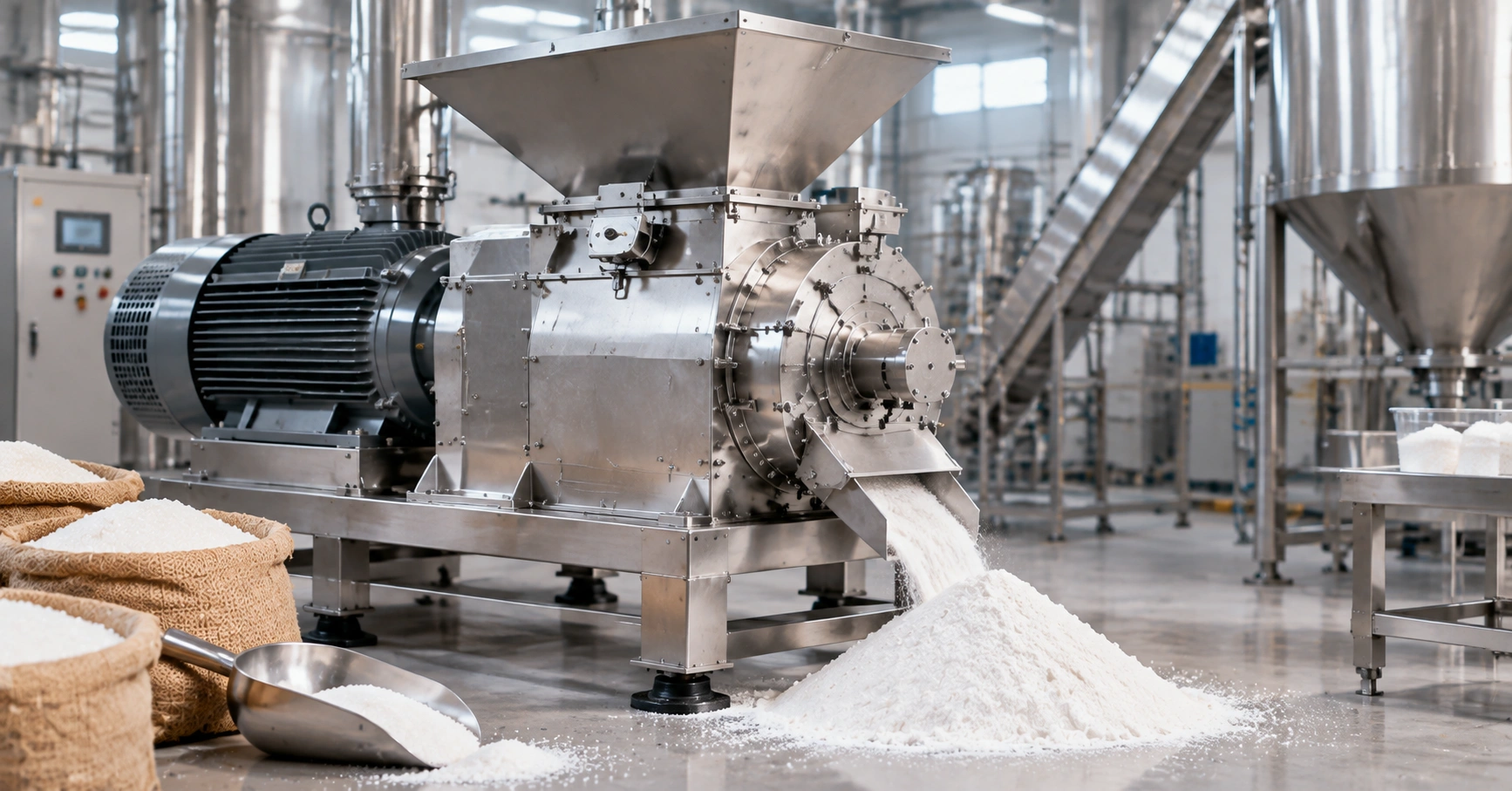
WHAT IS A UNIVERSAL MILL (UM)?
A Universal Mill is a high-speed impact mill suited to regular biscuit production, grinding sugar up to roughly 100 mesh. It's designed for 10 bar safety ratings and delivers high-efficiency, high-throughput grinding for standard hard and soft biscuit lines where ultra-fine sugar isn't required.
- Suitable for regular biscuit dough where sugar dissolves during mixing and baking.
- Higher throughput per kWh compared to ultra-fine grinding.
- Simpler mechanical design, lower maintenance complexity.
WHAT IS AN AIR CLASSIFIER MILL (ACM)?
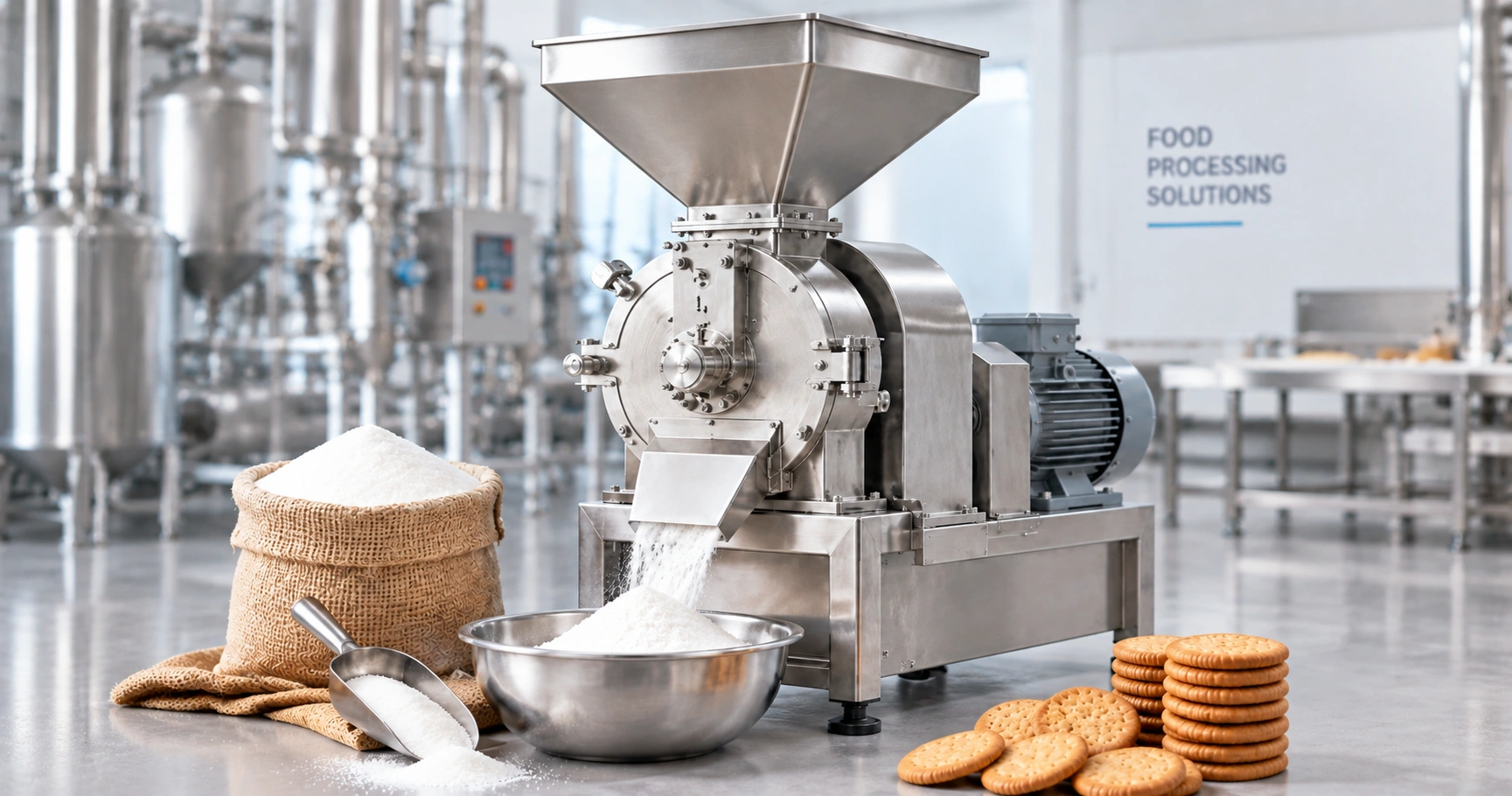
An Air Classifier Mill grinds sugar to ultra-fine consistency — up to 200 mesh — using an adjustable classifier wheel that separates particles by size in a closed loop. This is the standard choice for cream and sandwich biscuit lines, where the creamer needs a smooth, non-gritty texture.
- Adjustable classifier wheel for precise, repeatable mesh control.
- Closed-loop temperature control to prevent sugar from caking or melting during grinding.
- Dust-free collection via bag filter, keeping the grinding area enclosed.
UNIVERSAL MILL VS AIR CLASSIFIER MILL — SIDE-BY-SIDE COMPARISON
| Parameter | Universal Mill (UM) | Air Classifier Mill (ACM) |
|---|---|---|
| Fineness achieved | Up to 100 mesh | Up to 200 mesh |
| Best application | Regular hard/soft biscuits | Cream & sandwich biscuits |
| Temperature control | Standard | Closed-loop, precise control |
| Dust collection | Standard filtration | Enclosed bag filter, dust-free |
| Throughput per kWh | Higher | < Lower (finer grind = more energy) |
| Typical capex | Lower | < Higher |
WHICH MILL SHOULD YOU CHOOSE FOR YOUR BISCUIT LINE?
Regular or Hard Biscuit Lines
A Universal Mill is typically sufficient — 100 mesh sugar dissolves adequately during dough mixing and baking, and the higher throughput per kWh keeps operating costs lower.
Cream and Sandwich Biscuit Lines
An Air Classifier Mill is close to essential here. Creamer smoothness is judged directly by consumers, and 100 mesh sugar will read as gritty in a filling where 200 mesh reads as smooth.
Some larger plants run both mills — a Universal Mill for the main dough line and an ACM dedicated to creamer production — rather than trying to serve both needs from a single machine.
INTEGRATING THE MILL INTO YOUR SUGAR HANDLING SYSTEM
Whichever mill you choose, it sits within a larger sugar handling sequence: bag feeding → grinding (UM or ACM) → intermediate hopper with bin vent filter → rotary airlock valve → load-cell weigh hopper → creamer tank or direct dough mixer feed. The mill selection only pays off if the surrounding conveying and batching stages are sized to match its output consistency.
For the complete sugar handling sequence, see our guide to the raw material handling system for biscuit manufacturing plants, which also covers flour and liquid integration.
SAFETY CONSIDERATIONS IN SUGAR GRINDING
Sugar grinding — in either a Universal Mill or an Air Classifier Mill — generates fine combustible dust as a byproduct of the process itself, not just a handling side-effect. This is a recognised industrial hazard: sugar dust has caused documented fatal explosions in processing facilities, which is why both mill types should be specified with proper dust collection, grounding and bonding, and explosion relief venting as standard, not optional add-ons.
- 10 bar safety rating is standard for Universal Mills handling sugar and similar organic dusts.
- Bag filter dust collection should be sized to the mill's actual air volume, not a generic estimate.
- Electrical equipment in and around the grinding area should meet hazardous-area classification appropriate to combustible dust zones.
These aren't theoretical concerns — they're the same principles covered in OSHA's combustible dust guidance, which specifically identifies sugar as a material requiring engineered dust hazard controls.
Frequently Asked Questions
Not Sure Which Mill Matches Your Product Mix?
The right mill depends on your specific biscuit portfolio, batch sizes, and target fineness. Our engineering team can review your production mix and recommend a Universal Mill, Air Classifier Mill, or a combination sized to your plant.